Enhancement of wheat straw pellet quality for bioenergy through additive blending
 Tác giả: Bidhan Nath, Guangnan Chen, Les Bowtell, Thong Nguyen-Huy
 Thể loại: Công nghệ thông tin
 Lượt xem: 335
 Từ khóa:
Chọn định dạng để tải về:
Lĩnh vực:


Enhancement of wheat straw pellet quality for bioenergy through additive blending
Densification of biomass through pelletizing offers a promising approach to producing clean biofuels from renewable resources. This study, which investigates the impact of additive blends on wheat straw pellet making and upgrading the physiochemical properties, has revealed exciting possibilities. Five additives, including sawdust (SD), bentonite clay (BC), corn starch (S), crude glycerol (CG), and biochar (BioC), were chosen for this study. Pellets were made from seven different combinations using a laboratory-scale pellet mill. The resulting pellets’ physical and elemental properties were assessed against ISO 17,225-8 standards. Compared to control pellets, additive blends (T3-T7) exhibited significant improvements in mechanical durability (80% to 99%), tensile strength (0.36 MPa to 2.09 MPa), and bulk density (244 kg/m3 to 665.21 kg/m3), all meeting ISO standards. Additionally, these blends maintained low fines content (<2%) and water absorption capacity (<2%, except T1 and T5). Furthermore, fixed carbon content increased from 11.1% to 30.90%, and energy content rose from 17.02 MJ/kg to 20.36 MJ/kg, which showed a significant synergistic effect of blending additives. These findings underscore the potential of wheat straw as a viable biomass source for bioenergy production through pelletization, offering a hopeful outlook for the future of renewable energy. However, further research is necessary to optimize additive mixing ratios for even greater pellet quality.
Implications: The study successfully demonstrated that adding specific materials during wheat straw pelletizing significantly improves the quality of the pellets as a biofuel. Here are the key
implications of the statement. Wheat straw is a promising biofuel source: Densification through pelletizing makes wheat straw a viable option for renewable energy production; Additives enhance pellet quality: Sawdust, bentonite clay, corn starch, crude glycerol, and biochar improve the pellets’ durability, strength, density, and energy content; Improved pellet properties meet industry standards: The resulting pellets meet ISO standards for mechanical strength, bulk density, and fines content; Synergistic effect of blending: Combining different additives leads to a greater improvement than using them individually; Need for further research: Optimizing the ratios of these additives can potentially create even better biofuel pellets. Overall, the study highlights the potential of wheat straw pelletizing with specific additives as a sustainable and efficient biofuel option. There’s room for further improvement, but the initial findings are promising.
Xem thêm
🔒 Tài liệu này yêu cầu đăng nhập để xem nội dung PDF.
Đăng nhập để xem tài liệuTài liệu khác cùng chủ đề
KHUNG THAM CHIẾU ĐÀO TẠO AI THEO NIST/ISO & MLOPS CHO CHUYỂN ĐỔI SỐ CÔNG – TỪ LỚP HỌC ĐẾN VẬN HÀNH: ĐỐI SÁNH CHƯƠNG TRÌNH VÀ KHUYẾN NGHỊ
Trần Minh
 Thể loại: Công nghệ thông tin
Lượt xem: 63
ỨNG DỤNG TRÍ TUỆ NHÂN TẠO TRONG CHĂM SÓC SỨC KHỎE
Nguyễn Văn Diễn, Nguyễn Thùy Trang
Thể loại: Công nghệ thông tin
Lượt xem: 87 
Machine learning-based assessment of flood susceptibility in the Eastern Mediterranean: a case study of Baniyas River basin
Hazem Ghassan Abdo, Sahar Mohammed Richia, Taorui Zeng, Saeed Alqadhid, Pankaj Prasad, Thong Nguyen-Huy, Maged Muteb Alharbihand, Javed Mallick
Thể loại: Công bố quốc tế
Lượt xem: 306 
Assessing the concordance between meteorological and agricultural drought indices in arid and semi-arid regions
Arman Niknam, Mehrnoosh Taherizadeh, Javid Hojabri Khushemehr, Thong Nguyen-Huy, Reza Sarli
Thể loại: Công nghệ thông tin
Lượt xem: 236 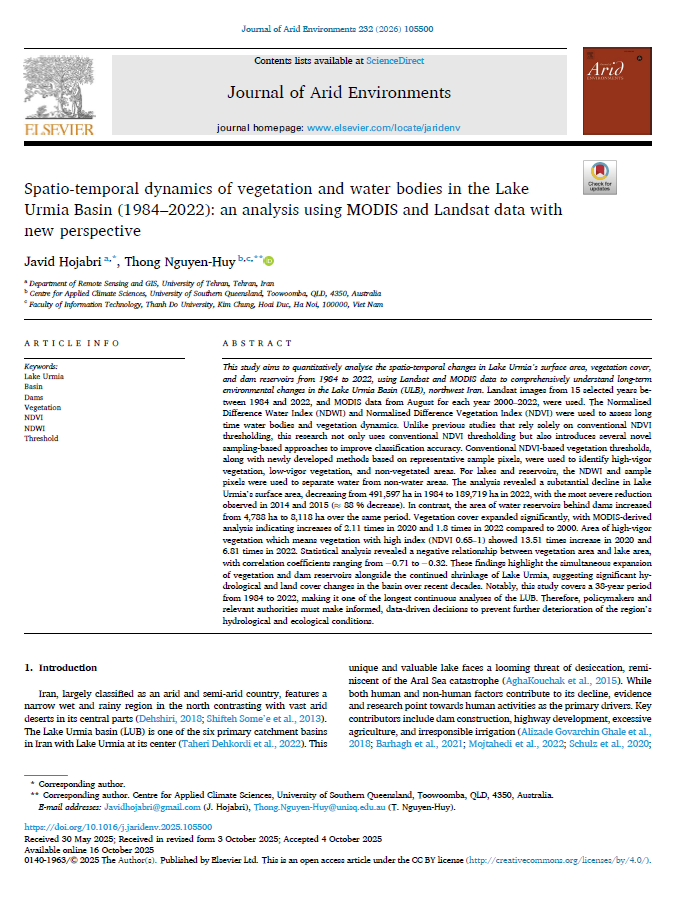
Spatio-temporal dynamics of vegetation and water bodies in the Lake Urmia Basin (1984–2022): an analysis using MODIS and Landsat data with new perspective
Javid Hojabri,Thong Nguyen-Huy
Thể loại: Công nghệ thông tin
Lượt xem: 271 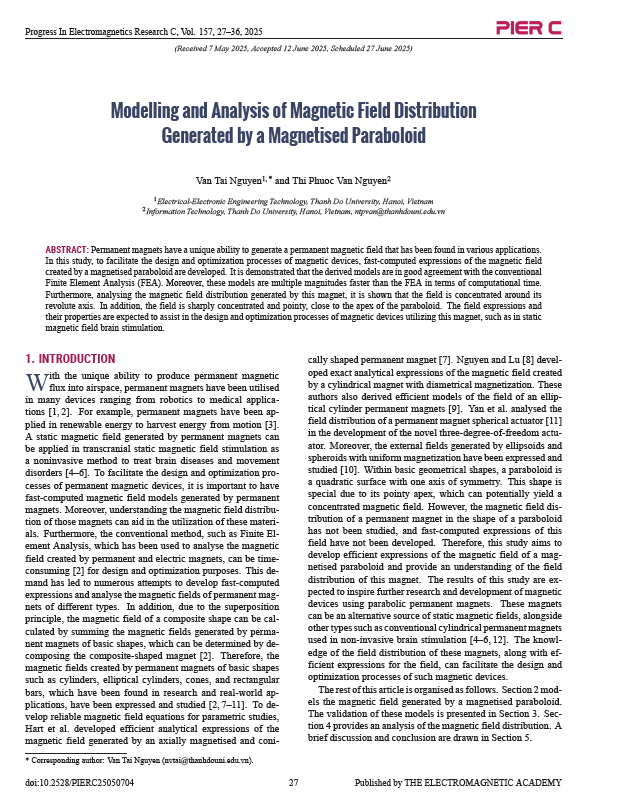
Modelling and Analysis of Magnetic Field Distribution Generated by a Magnetised Paraboloid
Nguyen Van Tai, Nguyen Thi Phuoc Van
Thể loại: Công nghệ thông tin
Lượt xem: 258 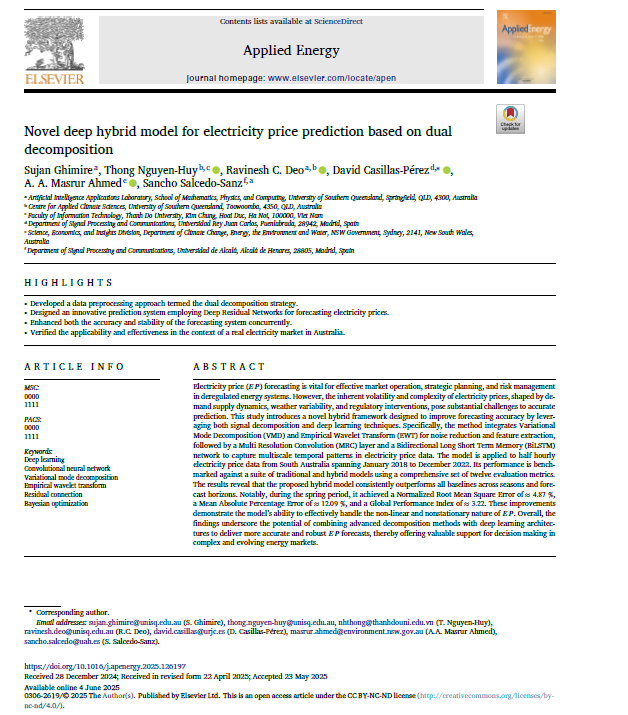
Novel deep hybrid model for electricity price prediction based on dual decomposition
Sujan Ghimire, Thong Nguyen-Huy, Ravinesh C. Deo, David Casillas-Pérez, A. A. Masrur Ahmed, Sancho Salcedo-Sanz
Thể loại: Công nghệ thông tin
Lượt xem: 269 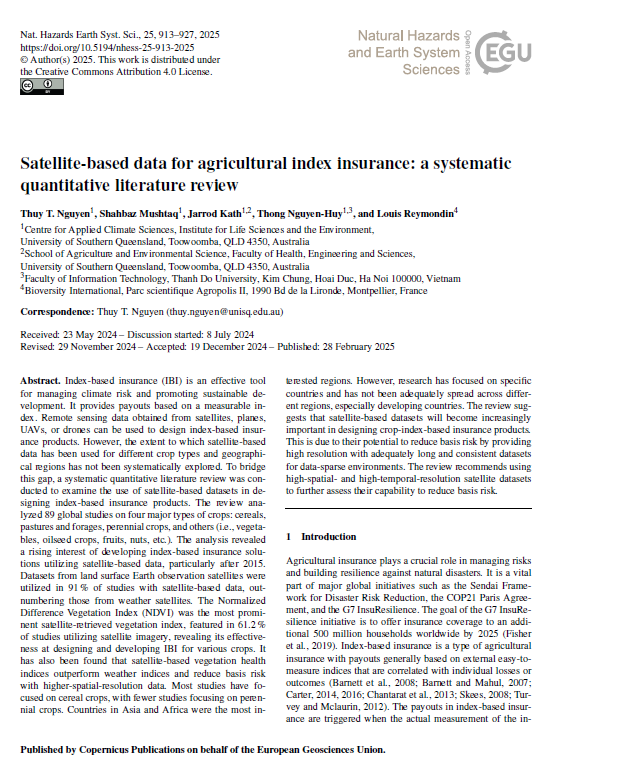
Satellite-based data for agricultural index insurance: a systematic quantitative literature review
Thuy T. Nguyen, Shahbaz Mushtaq, Jarrod Kath, Thong Nguyen-Huy, Louis Reymondin
Thể loại: Công nghệ thông tin
Lượt xem: 274 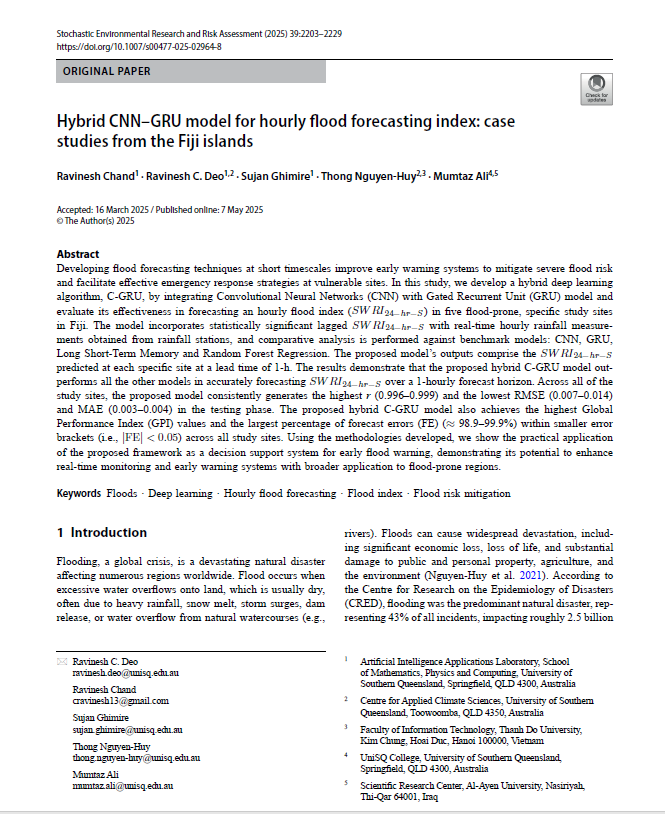
Hybrid CNN-GRU model for hourly flood forecasting index: case studies from the Fiji islands
Ravinesh Chand, Ravinesh C. Deo, Sujan Ghimire, Thong Nguyen-Huy, Mumtaz Ali
Thể loại: Công nghệ thông tin
Lượt xem: 321 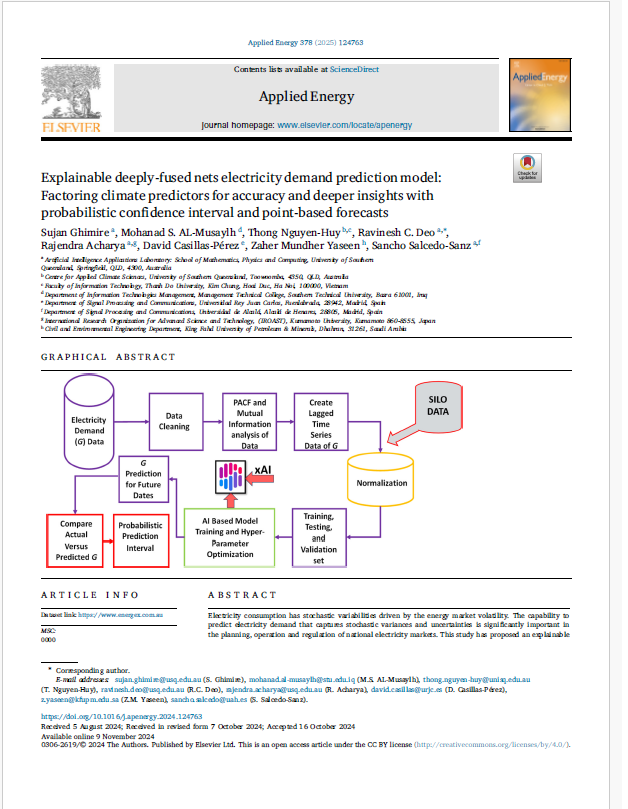
Explainable deeply-fused nets electricity demand prediction model: Factoring climate predictors for accuracy and deeper insights with probabilistic confidence interval and point-based forecasts
Sujan Ghimire, ohanad S. AL-Musaylhd, Thong Nguyen-Huy, Ravinesh C. Deoa, Rajendra Acharya, David Casillas-Pérez, Zaher Mundher Yaseen, Sancho Salcedo-Sanz
Thể loại: Công nghệ thông tin
Lượt xem: 226 
A pragmatic guide to systemd for Linux sysadmins
David Both
Thể loại: Sách mở
Lượt xem: 476 
Current & Emerging Computing Technology
Don Bentley
Thể loại: Công nghệ thông tin
Lượt xem: 485